
Overview

We strongly believe that putting communities at the centre of the clean energy transition not only improves peoples’ lives, but is vital to the acceleration of a just and inclusive transition.
Participation and ownership by local communities creates local socio-economic value and helps foster more positive attitudes towards renewables. This, in turn, increases citizen support for the energy transition.
Working closely with local partners or service providers who have good on-the-ground understanding of local conditions and communities has always been a vital strategy for Yinson Renewables. We are unwaveringly committed to continually engaging with our local stakeholders to ensure that the projects generate value in alignment to the area’s interests.
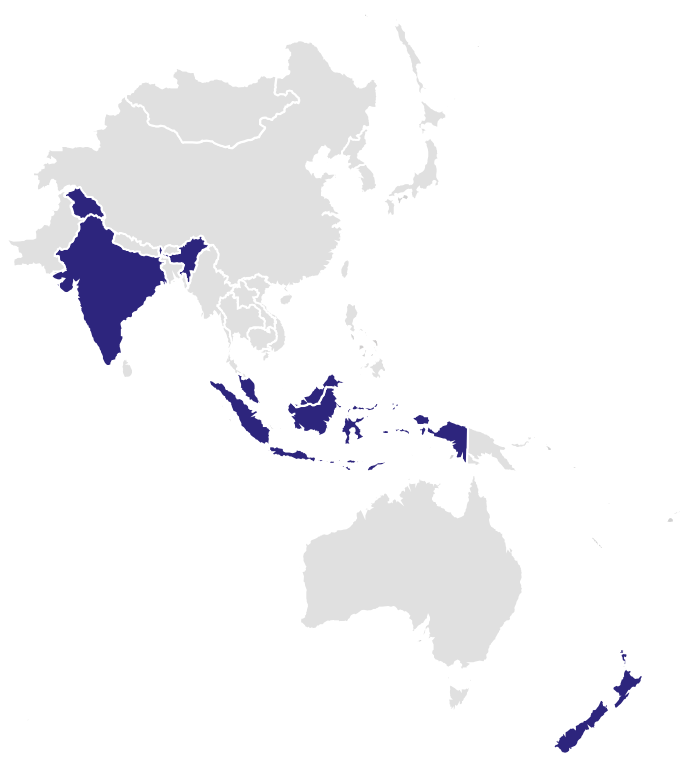
Asia Pacific
Asia Pacific is one of the world’s fastest‑growing clean‑energy markets, with renewable capacity nearing 2.6 TW in 2024 and ~USD 528 billion in investment — over 60% of global spending. Wind and solar continue to scale rapidly, driven by rising demand, industrial growth and strengthened climate commitments. Updated renewable targets, ASEAN‑led cooperation and new auctions for utility‑scale, hybrid and storage‑integrated projects are shaping the region’s energy transition.
- Several large-scale opportunities being taken forward
- First greenfield project, Pahiatua, was consented in Nov 25
- Approval received from New Zealand’s Overseas Investment Office in 2025
- Signed an agreement with Genesis in Nov 25 to provide PPAs & co-investment into projects
- 94.6 MW Mt Cass Wind Project currently under construction with the expected COD in 2028
- 19 MWp operational with ~6 MWp under construction (on a gross basis)
- Utility scale solar projects under investigation
- 175 MWp Bhadla and 285 MWp Nokh projects operational.
- 2109 kWp C&I systems in construction or operation
- C&I projects stands at ~7.5 MW across 10 projects
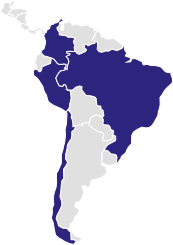
Latin America
Latin America remains one of the world’s cleanest power regions, with around 70% of electricity generated from renewables with potential to reach for 80% by 2050. Wind and solar are expanding alongside hydropower, displacing gas and diesel. Clean energy investment reached ~USD 70 billion in 2025. Governments advanced major grid and policy reforms, including large transmission auctions in Brazil and major renewable and transmission tenders in Chile and Peru.
- 97 MWp Matarani solar project operational
- Phase 1 (53 MWp) of Majes solar project currently under construction with the expected COD in 2026
- Additional projects under development
- Vicosa and Santa Clara wind projects, totaling 486 MW, awaiting grid allocation
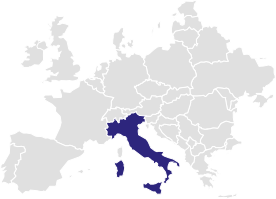
Europe
Europe’s energy transition gained momentum, driven by the Renewable Energy Directive targeting at least 42.5% renewables by 2030. Wind and solar now generate over 30% of EU electricity. Rising investment streamlined permitting and market reforms have improved energy security, reduced fossil fuel imports and shifted priorities toward grid expansion and system integration.
- Nearly 400 MWp of wind and PV projects in development, majority in consenting process
- Four projects (~100 MW) secured EIA approvals, awaiting final authorisations in 2026
As at FY2026
See next
New Zealand